

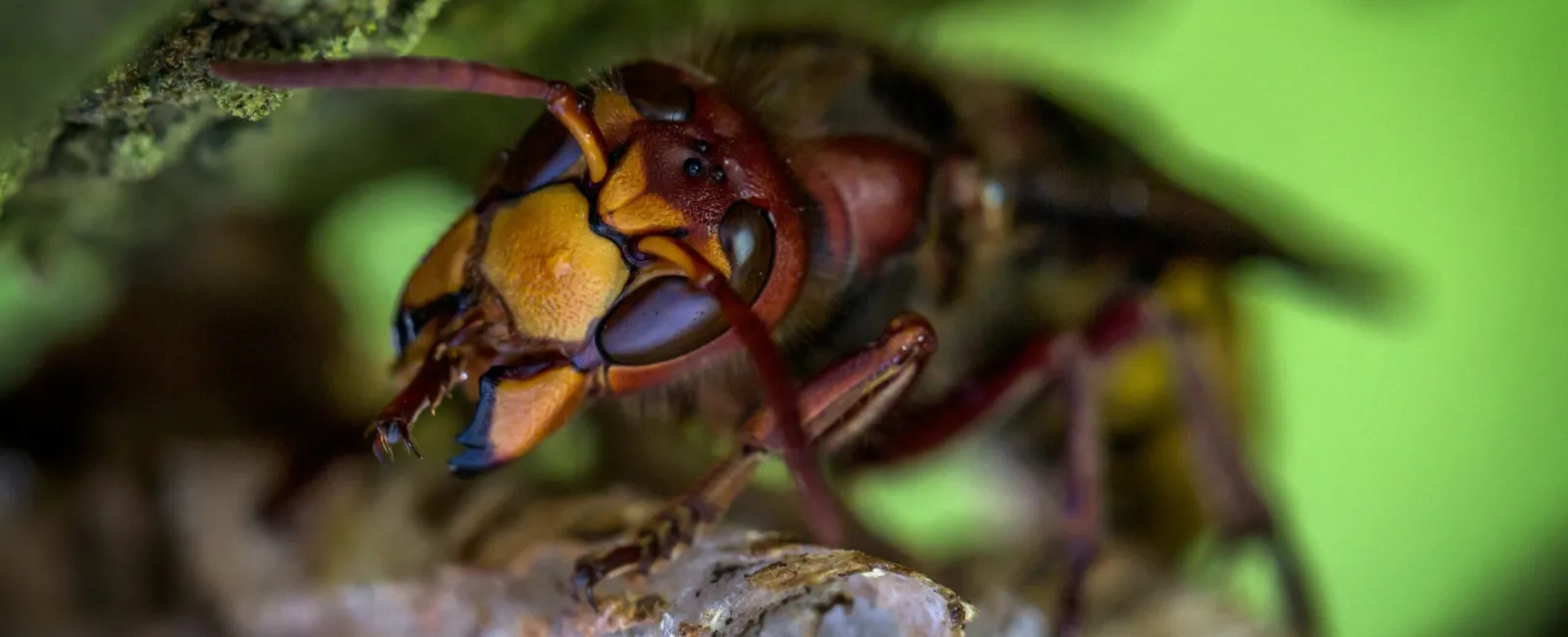
Summer is here, which means backyard BBQs, evenings on the patio, and... uninvited guests with wings.
If you've noticed more hornets buzzing around your home lately, you're not imagining things. July is peak hornet season, and what started as a tiny nest in the spring may have grown into a basketball-sized paper fortress by midsummer.
As Pest Nerds, we know one thing for certain: hornets don't need an invitation to your cookout; they're perfectly happy to crash it anyway.
The good news? Learning how to locate a hornet's nest early can help you address the problem before the colony continues to grow. Here's what every homeowner should know about identifying, locating, and safely getting rid of hornet nests:
What Does a Hornets Nest Look Like?
One of the easiest ways to identify a hornet's nest is by its appearance.
A hornet's nest is typically grayish-brown and made from a paper-like material created by chewing weathered wood fibers and mixing them with saliva. The result is a layered, swirled structure that resembles papier-mâché.
In early spring, a hornet's nest may be no larger than a golf ball. By July and August, however, a healthy colony can build a hornet's nest as large as a basketball, or even larger in ideal conditions.
Most hornet nests have a single entrance hole, often located near the bottom of the structure.
If you're trying to determine whether you've found a hornet's nest or a beehive, remember that beehives are made of wax rather than paper and have a very different appearance. Proper identification is important before taking any action.
Common Places to Find Hornets' Nests
Hornets are surprisingly resourceful when it comes to choosing a place to build their colonies. They look for areas that provide shelter, protection from predators, and easy access to food and water.
Some of the most common places to locate a hornet's nest include:
Garages and Sheds
If your garage door stays open for long periods during the summer, hornets may decide it's the perfect place to settle down. Be sure to inspect around garage doors, rafters, and storage areas regularly.
Underground Burrows
Certain hornet species are well known for taking over abandoned rodent burrows and creating nests underground. If you notice hornets repeatedly flying in and out of a hole in your yard, keep your distance.
The Attic
Attics provide warmth, shelter, and minimal disturbance, making them a favorite nesting location. While they aren't easy to inspect every day, seeing hornets indoors near upper floors could indicate activity overhead.
Inside Exterior Walls
One of the most common places to find a hornet's nest is inside your home's exterior walls. Hornets only need a small crack or opening around siding, soffits, vents, or utility penetrations to establish a colony hidden from view.
Trees, Shrubs, and Window Sills
Tree branches, shrubs, porch ceilings, and even window sills provide excellent support for above-ground hornet nests. During the summer, it's worth giving these areas a quick visual inspection before spending time outdoors.
How to Locate a Hornets Nest
Wondering how to locate a hornet's nest without putting yourself at risk?
The safest method is surprisingly simple: watch the hornets from a distance.
Hornets are creatures of habit. If you notice several flying through your yard, observe the direction they're traveling. Worker hornets repeatedly fly between food sources and their nest, making their flight paths one of the easiest clues to follow.
Rather than getting too close or attempting to lure hornets with food, use binoculars if necessary and observe from a safe distance. If multiple hornets disappear into the same tree, wall void, or roofline, you've likely found the nest.
Remember: if you suspect the nest is inside a wall or underground, avoid disturbing the area. Hidden colonies can become defensive quickly.
How to Get Rid of Hornets
If you've successfully located a hornet's nest, the next question is obvious: How do you get rid of hornets safely?
The answer depends on the colony's size and location.
Method #1: Remove Individual Hornets Indoors
If a single hornet finds its way inside your home, your first instinct might be to reach for the fly swatter.
Instead, grab the vacuum.
Using a vacuum hose lets you remove a single hornet from a safer distance without risking a close encounter. Once finished, empty the vacuum outdoors according to the manufacturer's recommendations.
While removing one hornet won't solve an infestation, it can safely eliminate the immediate problem.
Method #2: Treat a Small, Accessible Hornets Nest
If you've located a small hornet's nest that is easy to reach, an EPA-approved hornet spray may help, but is still considered a highly risky and dangerous option. Professional help is always recommended when treating any sort of nests, but if you have to take immediate action, there are sprays that can help.
For the best results and safest application:
- Treat the hornet's nest during dawn or dusk when most hornets have returned.
- Wear protective clothing and avoid standing directly beneath the nest.
- Follow all manufacturer instructions carefully.
- Wait several days before attempting to remove the nest to ensure there is no remaining activity.
Never attempt to knock down an active hornet's nest immediately after spraying.
When Should You Call a Professional?
Here's a Pest Nerd confession:
Just because you found the hornet's nest doesn't always mean you should remove it yourself.
Professional hornet nest removal is the safest option when the nest is:
- Inside your home's walls
- Located in an attic
- Underground
- High in a tree
- Larger than a softball
- Extremely active
Hornets aggressively defend their colonies, and disturbing a mature nest during peak summer can quickly turn a small problem into a dangerous situation.
Our recommendation? Don't wage war with hundreds of angry roommates that can fly.
How to Prevent Future Hornet Nests
The best way to get rid of hornets is to prevent them from moving in to begin with.
Throughout the summer:
- Seal cracks and gaps around siding, soffits, and utility openings.
- Keep outdoor trash cans tightly sealed.
- Trim tree branches that touch your home.
- Inspect sheds, decks, garages, and eaves for new nest activity.
- Remove small starter nests before they have a chance to grow (only if they are inactive and can be removed safely).
A few minutes of prevention today can save you from dealing with a much larger hornet's nest later in the season.
Call the Pest Nerds
Hornets may think your home is five-star real estate, but that doesn't mean they get to stay.
Whether you've spotted a single hornet or discovered a fully established hornet's nest, Greenix Pest Control can help identify the source of the problem and provide professional hornet nest removal that keeps your family safe.
At Greenix, we don't just treat the hornets you see. We look for the hidden nests, entry points, and conditions that invited them in to begin with.
Because your backyard should be known for burgers and lawn games... not surprise aerial attacks.
Contact the Pest Nerds today to schedule your inspection and take back your summer.
